United States
 United Kingdom
 Canada
 Australia
 United Arab Emirates
 Saudi Arabia
 Denmark
 France
 Germany
 Indonesia
 Ireland
 Morocco
 Netherlands
 New Zealand
 Norway
 Singapore
 South Africa
 Sweden
 Turkey
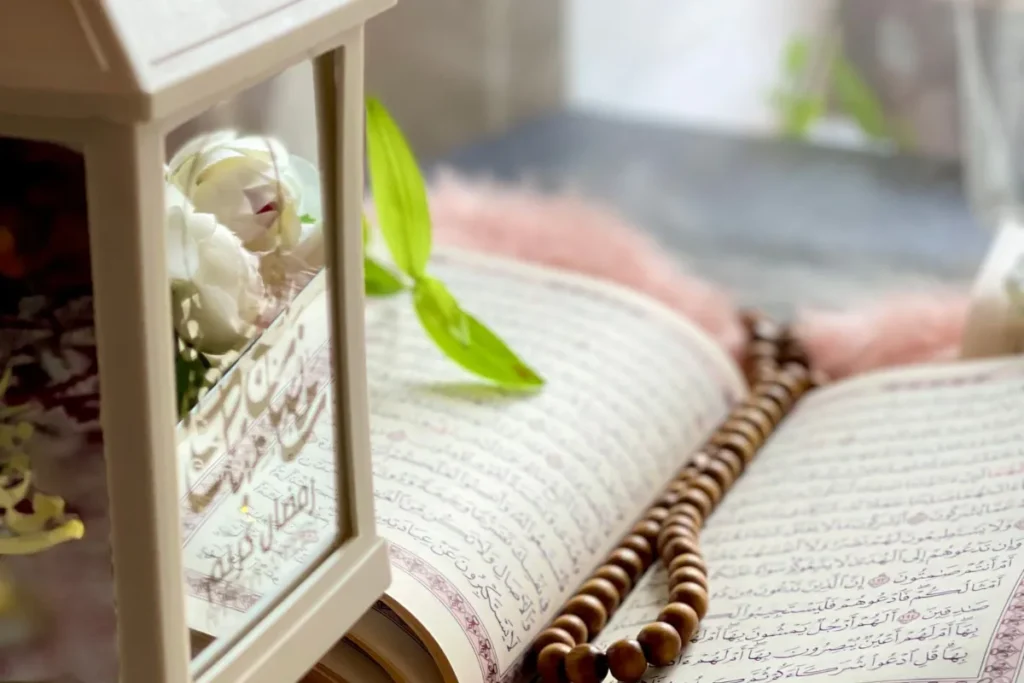
The last two ayat of Surah Al-Baqarah are verses 285 and 286, the closing verses of the Quran’s longest surah. They describe the faith of the Prophet ﷺ and the believers, and end with a short, powerful dua asking Allah for forgiveness, mercy and help. The Prophet ﷺ said that whoever recites these two verses at night, they will be sufficient for him. This guide gives you the Arabic text, a plain-English meaning, the authentic virtues, and a simple plan to memorize them with correct pronunciation.
The English meanings in this article are our own plain-English renderings to help you understand the verses. They are not a replacement for the Arabic text or a published translation. You can compare them with translations on Quran.com.
The last two ayat of Surah Baqarah in Arabic
Surah Al-Baqarah has 286 verses. The final two are verse 285 (beginning Amana ar-Rasul) and verse 286 (beginning La yukallifullahu nafsan):
Arabic text: Quran 2:285-286, from Quran.com.
What the last two verses of Surah Baqarah mean
Verse 285: the declaration of faith
Meaning: The Messenger believes in what has been sent down to him from his Lord, and so do the believers. Each of them believes in Allah, His angels, His Books and His messengers. “We make no distinction between any of His messengers.” And they say, “We hear and we obey. We ask Your forgiveness, our Lord, and to You is the final return.”
This verse summarizes the core beliefs of a Muslim in one sentence: belief in Allah, the angels, the revealed Books and all of the messengers. It also teaches the right response to Allah’s commands: sami’na wa ata’na, “we hear and we obey”, followed straight away by a request for forgiveness.
Verse 286: Allah’s mercy and a complete dua
Meaning: Allah does not burden any soul beyond what it can bear. Each soul gains the good it has earned and bears the evil it has earned. “Our Lord, do not take us to task if we forget or make a mistake. Our Lord, do not place on us a burden like the one You placed on those before us. Our Lord, do not burden us with what we have no strength to bear. Pardon us, forgive us and have mercy on us. You are our Protector, so help us against those who disbelieve.”
The verse opens with a promise many people find deeply comforting: you will never be asked to carry more than you can bear. It then turns into a dua made of several short requests, each beginning with Rabbana, “Our Lord”. Many families teach these phrases to children as one of their first longer duas.
Want to memorize these verses with correct Tajweed? A teacher can listen to your recitation line by line and correct the pronunciation as you learn. Try a free one-to-one trial class.
Why these verses are special: the authentic virtues
The virtues below come from well-known, authentic hadith collections. We link to each source so you can read the full narration.
| Virtue | Source |
|---|---|
| Whoever recites the last two verses of Surah Al-Baqarah at night, they will suffice him. | Sahih al-Bukhari 5009, Sahih Muslim 807 |
| An angel described Al-Fatiha and the closing verses of Al-Baqarah as two lights given to the Prophet ﷺ that were not given to any prophet before him. | Sahih Muslim 806 |
| When the companions accepted Allah’s command with “we hear and we obey”, these verses were revealed, and Allah answered each request in the dua. | Sahih Muslim 126 |
What does “they will suffice him” mean?
Scholars have explained “suffice” in more than one way. Some said the verses are enough to protect a person from harm that night; others said they are enough in place of a longer night prayer for someone who cannot manage more; and some said both meanings are included. Commentators such as Imam an-Nawawi mentioned these explanations in his commentary on Sahih Muslim. Whichever meaning is intended, the practical lesson is the same: these two verses are a short, authentic and easy habit to keep every night.
When to recite the last two ayat of Surah Baqarah
- At night: the hadith mentions recitation “at night”, so many Muslims recite them after the Isha prayer or before going to sleep.
- In prayer: you can recite them after Al-Fatiha in any prayer, including the night prayer.
- As dua: the requests in verse 286 can be used in your personal dua at any time.
There is no need to recite them a fixed number of times. Reciting them once, with attention to what you are saying, fulfils the hadith.
How to memorize the last two ayat of Surah Baqarah
These verses are longer than the short surahs most people know by heart, but they break into natural phrases. A simple seven-day plan works well for both children and adults:
| Day | What to learn |
|---|---|
| 1 | Verse 285 up to wa rusulih (the list of beliefs) |
| 2 | The rest of verse 285, ending wa ilaykal-masir |
| 3 | Verse 286 up to wa ‘alayha maktasabat |
| 4 | Rabbana la tu’akhidhna … the first request |
| 5 | The second and third Rabbana requests |
| 6 | The ending, from wa’fu ‘anna to the end |
| 7 | Recite both verses in full, from memory, three times |
Practical tips:
- Listen first. Play a slow, clear recitation of the two verses several times before reading along.
- Learn the meaning with the words. When you know that each Rabbana starts a new request, the order becomes easier to remember. Our guide to learning the Quran word by word shows how to do this.
- Review at night. Reciting the verses before sleep is both the sunnah practice and the best revision.
- Get checked. Long words such as tu’akhidhna and tuhammilna are easy to mispronounce. Ask a teacher to listen.
For more techniques, see our Quran memorization tips for children and adults.
Common pronunciation points
- Heavy letters: the ص in al-masir and the ط in ata’na are heavy. Keep the mouth full and rounded.
- The ‘ayn: sami’na, ata’na and wa’fu ‘anna all contain ع, a throat letter that English speakers often drop.
- Ghunnah and ikhfa: phrases such as min rabbihi and an-nasina include noon rules. Our guide to noon sakinah and tanween rules explains them.
- Stopping: if you need to pause in this long verse, stop at the end of a complete phrase. Our guide to Quran stop signs explains where.
Learning these verses in the US and UK
Many families in America and Britain make these verses part of a bedtime routine: one parent recites, the children repeat, and over a few weeks everyone knows them by heart. If you would like a teacher to guide the process, our online Hifz classes and Quran with Tajweed course are live and one-to-one, scheduled in your own time zone, whether that is an evening in Eastern Time or a weekend morning in the UK.
Frequently asked questions
Which verses are the last two ayat of Surah Baqarah?
They are verses 285 and 286 of Surah Al-Baqarah, the second chapter of the Quran. Verse 285 begins “Amana ar-Rasul” and verse 286 begins “La yukallifullahu nafsan”.
What is the benefit of reciting the last two verses of Surah Baqarah at night?
The Prophet ﷺ said that whoever recites them at night, they will suffice him (Sahih al-Bukhari and Sahih Muslim). Scholars explained this as sufficiency from harm, from a longer night prayer, or both.
Can I recite them from my phone or after Isha?
Yes. You can recite them at any time during the night, including straight after Isha, and you may read them from a printed Mushaf, a phone or memory.
How long does it take to memorize the last two ayat of Surah Baqarah?
Many learners memorize them within one to two weeks by learning a short phrase each day and reviewing at night. Children who already know Juz ‘Amma often learn them faster.
Can children learn the last two verses of Surah Baqarah?
Yes. Children can learn them phrase by phrase, especially if they hear them recited every night. A teacher can make sure their pronunciation is correct from the start.
Make these verses part of your night
The last two ayat of Surah Al-Baqarah are short enough to learn in a week and meaningful enough to recite for a lifetime. If you would like help with memorization, Tajweed or understanding the meaning, find the right Quran learning program for you or your child, or contact Home Quran Tutors with any questions.
Learn and memorize with a teacher, one-to-one. Live one-to-one Quran lessons for children and adults in the US, the UK and worldwide.
Written by the Home Quran Tutors team. This article is general guidance for learners and parents; for religious rulings, please ask your teacher or a qualified scholar you trust.