United States
 United Kingdom
 Canada
 Australia
 United Arab Emirates
 Saudi Arabia
 Denmark
 France
 Germany
 Indonesia
 Ireland
 Morocco
 Netherlands
 New Zealand
 Norway
 Singapore
 South Africa
 Sweden
 Turkey
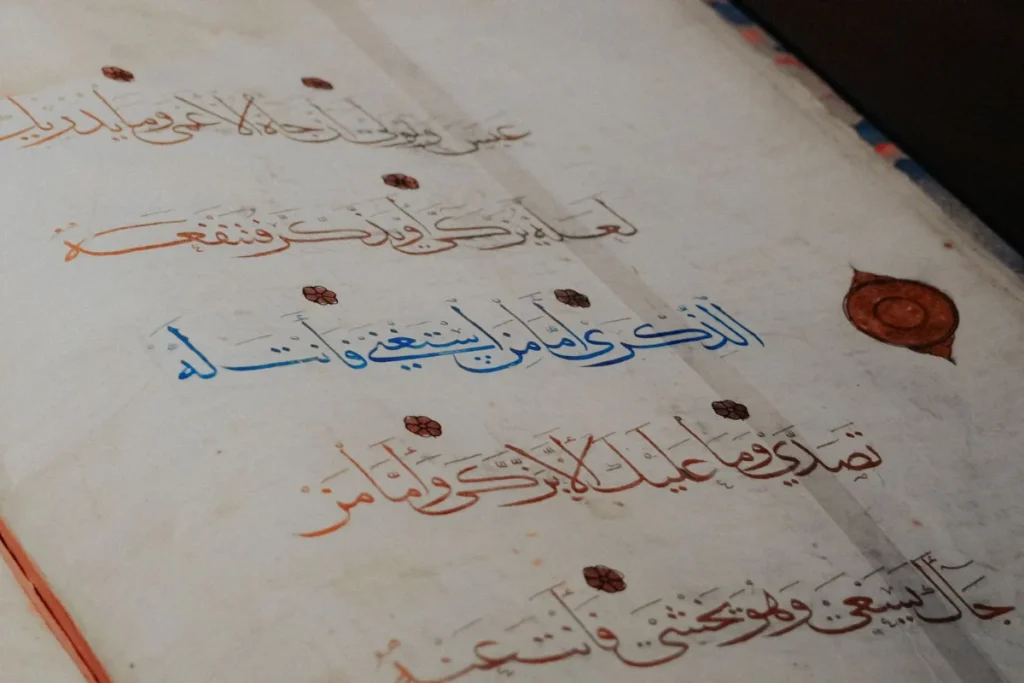
The rules of noon sakinah and tanween tell you how to pronounce a noon that has no vowel (نْ), and the “n” sound of tanween (ـً ـٍ ـٌ), depending on the letter that comes straight after it. There are four rules: izhar (pronounce it clearly), idgham (merge it into the next letter), iqlab (change it to a meem sound) and ikhfa (hide it with a nasal sound). Once you know which letters trigger which rule, you can apply them across the whole Quran. This guide explains each rule with examples and a simple way to remember the letters.
Tajweed is learned by listening and reciting. Use this guide to understand the rules, then practise them aloud with a teacher who can hear you.
What are noon sakinah and tanween?
Noon sakinah is a noon with a sukoon, such as the noon in مِنْ (min) or أَنْتُمْ (antum). It can appear in the middle or at the end of a word, in nouns, verbs and particles.
Tanween is the doubled vowel at the end of a noun: ـً (an), ـٍ (in) or ـٌ (un). It is pronounced as an extra noon sakinah, but it is not written as a noon. For example, عَلِيمٌ is read ‘aleemun. Because tanween sounds like a noon sakinah, it follows exactly the same four rules.
The key question each time is simple: which letter comes next? That letter decides the rule.
The four rules at a glance
| Rule | What happens | Letters | Example |
|---|---|---|---|
| Izhar | Noon pronounced clearly, no extra nasal sound | ء ه ع ح غ خ (6 throat letters) | مَنْ آمَنَ |
| Idgham | Noon merges into the next letter | ي ر م ل و ن (يَرْمَلُون) | مَنْ يَقُولُ |
| Iqlab | Noon changes to a hidden meem with ghunnah | ب (1 letter) | مِنْ بَعْدِ |
| Ikhfa | Noon is hidden with a nasal sound | The remaining 15 letters | مِنْ قَبْلِ |
Six letters for izhar, six for idgham, one for iqlab and fifteen for ikhfa make up all 28 letters of the Arabic alphabet. If you need a refresher on the letters themselves, see our guide to the Arabic alphabet.
1. Izhar: pronouncing the noon clearly
Izhar means “to make clear”. When noon sakinah or tanween is followed by one of the six throat letters, ء ه ع ح غ خ, the noon is pronounced clearly from its usual place at the tip of the tongue, without stretching the nasal sound.
- مَنْ آمَنَ (man aamana): noon followed by hamzah
- مِنْ عِلْمٍ (min ‘ilm): noon followed by ‘ayn
- عَذَابٌ أَلِيمٌ (‘adhaabun aleem): tanween followed by hamzah
- يَنْحِتُونَ (yanhitoon): noon followed by haa in the same word
The reason is distance: the throat letters are far from the tip of the tongue, so there is no easy way to merge or hide the noon. A common mistake is to add a “nasal hum” here. Keep it crisp.
2. Idgham: merging into the next letter
Idgham means “to merge”. When noon sakinah or tanween is followed by one of the six letters in the word يَرْمَلُون (ya, ra, meem, lam, waw, noon), the noon is absorbed into the next letter. Idgham only happens across two words: the noon is at the end of one word and the next letter starts the following word.
Idgham with ghunnah (ي ن م و)
With the four letters of يَنْمُو, the noon merges and a nasal sound (ghunnah) is held for about two counts.
- مَنْ يَقُولُ (may-yaqool)
- مِنْ نِعْمَةٍ (min-ni’mah)
- مِنْ مَاءٍ (mim-maa’)
- مِنْ وَالٍ (miw-waal)
Idgham without ghunnah (ل ر)
With lam and ra, the noon merges completely and there is no nasal sound.
- مِنْ رَبِّهِمْ (mir-rabbihim)
- هُدًى لِلْمُتَّقِينَ (hudal-lil-muttaqeen)
An important exception
If noon sakinah is followed by ي or و inside the same word, there is no idgham, and the noon is pronounced clearly. This happens in four words in the Quran: الدُّنْيَا, بُنْيَانٌ, قِنْوَانٌ and صِنْوَانٌ. Merging these would make the word sound like a different word, so the noon stays clear.
Finding these rules hard to hear on your own? Idgham and ikhfa are much easier to get right when a teacher can model the sound and correct you straight away. Book a free one-to-one evaluation to see where your recitation stands.
3. Iqlab: changing the noon to meem
Iqlab means “to change”. When noon sakinah or tanween is followed by ب (ba), the noon sound changes into a meem that is lightly hidden, with ghunnah for about two counts. The lips close gently, without pressing hard.
- مِنْ بَعْدِ (mim ba’di)
- أَنْبِئْهُمْ (ambi’hum): inside one word
- سَمِيعٌ بَصِيرٌ (samee’um baseer), with tanween
Many Mushafs print a small meem (ۢ) above the noon or tanween to remind you of iqlab.
4. Ikhfa: hiding the noon
Ikhfa means “to hide”. With the remaining 15 letters, the noon is neither pronounced clearly nor fully merged. The tongue does not press firmly at the noon’s place; instead the sound is held in the nose for about two counts while the mouth prepares for the next letter.
The 15 ikhfa letters are: ت ث ج د ذ ز س ش ص ض ط ظ ف ق ك.
- مِنْ قَبْلِ (min qabli), the nasal sound leans towards the heavy qaf
- أَنْتُمْ (antum): inside one word
- مُنْذِرٌ (mundhir)
- عَلِيمٌ قَدِيرٌ (‘aleemun qadeer), with tanween
A useful tip: the ghunnah in ikhfa takes on the “colour” of the next letter. Before heavy letters such as ق, ص or ط it sounds fuller; before light letters such as ت or س it sounds lighter.
How to remember the letters
- Izhar: the six throat letters, from deepest to closest: ء ه then ع ح then غ خ.
- Idgham: the word يَرْمَلُون. Inside it, يَنْمُو takes ghunnah and ل ر do not.
- Iqlab: just one letter, ب.
- Ikhfa: everything else. If the next letter is not in the first three groups, it is ikhfa.
Common mistakes to avoid
- Adding ghunnah in izhar, especially before ع and ح.
- Applying idgham inside one word, as in الدُّنْيَا.
- Pressing the lips hard in iqlab, which makes a full “m” instead of a hidden meem.
- Pronouncing the noon fully in ikhfa, so that مِنْ قَبْلِ sounds like “min-qabli” with a hard n.
- Rushing the ghunnah. Idgham with ghunnah, iqlab and ikhfa all need about two counts.
How to practise the rules
- Learn one rule a week. Start with izhar and iqlab, which have the fewest letters.
- Find examples in short surahs. Surah Al-Baqarah’s opening pages and Juz ‘Amma both contain many.
- Say each example slowly, then at normal speed.
- Use a colour-coded Tajweed Mushaf, which marks ghunnah and ikhfa in colour.
- Have a teacher listen regularly. Small errors in ghunnah are hard to notice in your own voice.
These rules are part of a bigger picture. Our Tajweed rules for beginners overview covers meem sakinah, madd and the other rules you will meet next, and our guide to qalqalah letters explains the echoing letters. If you are still learning to read fluently, start with Quran reading lessons first.
Learning from the US or the UK
Families in the US often fit Tajweed lessons into weekday evenings or weekend mornings in their local time zone, while UK families commonly choose after-school slots or Saturday and Sunday mornings. Because lessons are one-to-one, the time is agreed with you, and a female Quran teacher can be requested for sisters and young girls.
Frequently asked questions
How many rules of noon sakinah and tanween are there?
There are four rules: izhar, idgham, iqlab and ikhfa. The letter after the noon sakinah or tanween decides which rule applies.
What are the letters of izhar?
The six throat letters: ء (hamzah), ه (ha), ع (‘ayn), ح (haa), غ (ghayn) and خ (kha).
What is the difference between idgham and ikhfa?
In idgham the noon is fully merged into the next letter. In ikhfa the noon is hidden with a nasal sound, but not merged, while the mouth prepares for the next letter.
How long is the ghunnah in ikhfa?
About two counts (harakat), the same as idgham with ghunnah and iqlab.
Does tanween follow the same rules as noon sakinah?
Yes. Tanween is pronounced as a noon sakinah at the end of a noun, so the same four rules apply.
Get your recitation checked
The fastest way to master these rules is to recite and be corrected. A free evaluation lesson lets a teacher hear your reading and recommend the right level. You can also message us on WhatsApp. If you already know which course you want, you can enrol directly.
Learn Tajweed one-to-one. Live online lessons for children and adults, scheduled around your time zone.
Written by the Home Quran Tutors team. This article is general guidance for learners and parents; for religious rulings, please ask your teacher or a qualified scholar you trust.