United States
 United Kingdom
 Canada
 Australia
 United Arab Emirates
 Saudi Arabia
 Denmark
 France
 Germany
 Indonesia
 Ireland
 Morocco
 Netherlands
 New Zealand
 Norway
 Singapore
 South Africa
 Sweden
 Turkey
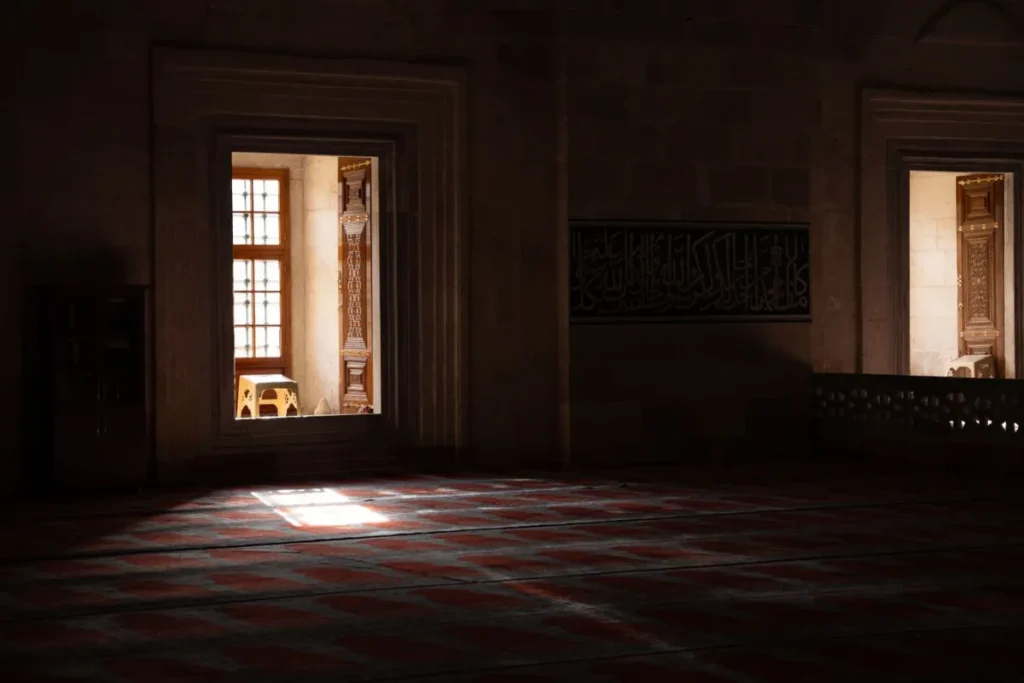
Salat al-Janazah, the Islamic funeral prayer, is a short congregational prayer offered for a Muslim who has died. It is prayed standing, with four takbirs (saying “Allahu Akbar”) and no bowing or prostration: after the first takbir you recite Surah Al-Fatiha, after the second you send blessings on the Prophet ﷺ, after the third you make dua for the deceased, and after the fourth you end with salam. The whole prayer usually takes only a few minutes. This guide walks you through how to pray Janazah step by step, the duas in Arabic with meaning, the main differences between the schools, and what to say when someone passes away.
The English meanings in this article are our own plain-English renderings. Hadith sources are linked so you can read them in full on sunnah.com. For detailed rulings in your situation, ask a qualified local scholar or your imam.
Janazah prayer at a glance
| Detail | What to know |
|---|---|
| Ruling | Fard kifayah (a communal obligation): if some Muslims pray it, the rest are not sinful |
| Position | Standing only; no ruku (bowing) or sujud (prostration) |
| Takbirs | Four |
| Recitation | Usually recited quietly, including by the imam (only the takbirs and salam are said aloud) |
| Requirements | Wudu, clean clothes and place, facing the qiblah, intention |
| Who may attend | Men and women; children who understand the prayer may join |
For how Janazah fits among the other categories of prayer, see our guide to fard, wajib, sunnah and nafl prayers.
How to pray Janazah: step by step
Before you begin
- Make sure you have wudu. The funeral prayer needs the same purity as any other prayer. Our guide on what breaks wudu explains the details.
- Stand in rows behind the imam, facing the qiblah, with the body placed in front of the imam.
- Where the imam stands: it is Sunnah for the imam to stand level with the middle of a woman’s body (Sahih al-Bukhari 1332) and near the head of a man (Jami’ at-Tirmidhi 1034).
- Make the intention in your heart to pray the funeral prayer for this deceased person. It does not need to be said aloud.
Step 1: First takbir, then Surah Al-Fatiha
Raise your hands and say “Allahu Akbar,” then place your hands on your chest as in normal prayer. Recite Surah Al-Fatiha quietly. The companion Ibn Abbas recited Al-Fatiha in a funeral prayer and said he did so “so that you know it is the Sunnah” (Sahih al-Bukhari 1335).
Hanafi practice: in the Hanafi school, the opening praise (thana: “Subhanakallahumma wa bihamdika…”) is recited after the first takbir instead of Al-Fatiha. Follow what your local imam and community practice.
Step 2: Second takbir, then blessings on the Prophet ﷺ
Say “Allahu Akbar” again and recite the Salat Ibrahimiyyah, the same blessings on the Prophet ﷺ that you recite in the final sitting of every prayer (“Allahumma salli ‘ala Muhammad wa ‘ala ali Muhammad…”).
Step 3: Third takbir, then dua for the deceased
Say “Allahu Akbar” a third time and make sincere dua for the person who has died. This is the heart of the Janazah prayer. The best-known dua is the one the Prophet ﷺ was heard saying at a funeral:
اللَّهُمَّ اغْفِرْ لَهُ وَارْحَمْهُ، وَعَافِهِ وَاعْفُ عَنْهُ، وَأَكْرِمْ نُزُلَهُ، وَوَسِّعْ مُدْخَلَهُ، وَاغْسِلْهُ بِالْمَاءِ وَالثَّلْجِ وَالْبَرَدِ، وَنَقِّهِ مِنَ الْخَطَايَا كَمَا نَقَّيْتَ الثَّوْبَ الْأَبْيَضَ مِنَ الدَّنَسِ، وَأَبْدِلْهُ دَارًا خَيْرًا مِنْ دَارِهِ، وَأَهْلًا خَيْرًا مِنْ أَهْلِهِ، وَزَوْجًا خَيْرًا مِنْ زَوْجِهِ، وَأَدْخِلْهُ الْجَنَّةَ، وَأَعِذْهُ مِنْ عَذَابِ الْقَبْرِ وَمِنْ عَذَابِ النَّارِ
Transliteration: Allahummaghfir lahu warhamhu, wa ‘afihi wa’fu ‘anhu, wa akrim nuzulahu, wa wassi’ mudkhalahu, waghsilhu bil-ma’i wath-thalji wal-barad, wa naqqihi minal-khataya kama naqqaytath-thawbal-abyada minad-danas, wa abdilhu daran khayran min darihi, wa ahlan khayran min ahlihi, wa zawjan khayran min zawjihi, wa adkhilhul-jannah, wa a’idhhu min ‘adhabil-qabri wa min ‘adhabin-nar
Meaning: O Allah, forgive him and have mercy on him, keep him safe and pardon him. Honor his arrival and make his grave spacious. Wash him with water, snow and hail, and cleanse him of sins as a white garment is cleansed of dirt. Give him a home better than his home, a family better than his family and a spouse better than his spouse. Admit him to Paradise and protect him from the punishment of the grave and the punishment of the Fire.
Source: Sahih Muslim 963
For a woman: change the pronouns from “-hu” to “-ha” (for example Allahummaghfir laha warhamha). Some scholars recommend leaving out “and a spouse better than her spouse” for a woman.
Another short, comprehensive dua taught for the funeral prayer:
اللَّهُمَّ اغْفِرْ لِحَيِّنَا وَمَيِّتِنَا، وَشَاهِدِنَا وَغَائِبِنَا، وَصَغِيرِنَا وَكَبِيرِنَا، وَذَكَرِنَا وَأُنْثَانَا، اللَّهُمَّ مَنْ أَحْيَيْتَهُ مِنَّا فَأَحْيِهِ عَلَى الْإِسْلَامِ، وَمَنْ تَوَفَّيْتَهُ مِنَّا فَتَوَفَّهُ عَلَى الْإِيمَانِ، اللَّهُمَّ لَا تَحْرِمْنَا أَجْرَهُ وَلَا تُضِلَّنَا بَعْدَهُ
Transliteration: Allahummaghfir li-hayyina wa mayyitina, wa shahidina wa gha’ibina, wa saghirina wa kabirina, wa dhakarina wa unthana. Allahumma man ahyaytahu minna fa-ahyihi ‘alal-islam, wa man tawaffaytahu minna fa-tawaffahu ‘alal-iman. Allahumma la tahrimna ajrahu wa la tudillana ba’dah.
Meaning: O Allah, forgive our living and our dead, those present and those absent, our young and our old, our men and our women. O Allah, whoever of us You keep alive, keep alive in Islam, and whoever of us You take, take in faith. O Allah, do not deprive us of the reward for him, and do not let us go astray after him.
Source: Sunan Abi Dawud 3201
For a child: many scholars recommend praying for the parents, for example Allahummaj’alhu lana faratan wa salafan wa ajra, “O Allah, make him a forerunner, a reward and a store of good for us,” which al-Bukhari mentions from al-Hasan al-Basri. If you have not memorized an Arabic dua yet, a sincere dua in your own language is acceptable.
Want to learn these duas properly? Our teachers help adults and children memorize the funeral prayer, daily duas and the Quran with correct pronunciation, in live one-to-one lessons.
Step 4: Fourth takbir, then salam
Say “Allahu Akbar” a fourth time, pause briefly (some scholars recommend a short dua here), then end the prayer by turning your head to the right and saying “As-salamu ‘alaykum wa rahmatullah.” Some scholars say one salam to the right is enough; others say two, right and left, as in normal prayer. Both are practiced.
Common questions about the steps
Do you raise your hands at every takbir?
Everyone raises the hands at the first takbir. Scholars differ about the other three: many, including the Shafi’is and Hanbalis, raise the hands at every takbir, while the Hanafis and many Malikis raise them only at the first. Either way the prayer is valid.
What if I join late?
Join the imam with a takbir in the position he has reached. After the imam’s salam, complete the takbirs you missed before the body is lifted, then say salam yourself.
Can women pray the Janazah prayer?
Yes. Women may pray the funeral prayer, whether in congregation at the mosque or at home.
The reward for praying Janazah
The Prophet ﷺ said that whoever attends a funeral until the prayer is offered receives one qirat of reward, and whoever stays until the burial receives two. When asked what a qirat is, he said: like two great mountains (Sahih al-Bukhari 1325).
What to say when someone dies in Islam
When you hear the news
إِنَّا لِلَّهِ وَإِنَّا إِلَيْهِ رَاجِعُونَ، اللَّهُمَّ أْجُرْنِي فِي مُصِيبَتِي، وَأَخْلِفْ لِي خَيْرًا مِنْهَا
Transliteration: Inna lillahi wa inna ilayhi raji’un. Allahumma’jurni fi musibati, wa akhlif li khayran minha.
Meaning: We belong to Allah and to Him we will return. O Allah, reward me in my affliction and replace it for me with something better.
Source: The first line is from the Quran, Surah Al-Baqarah 2:156; the dua is in Sahih Muslim 918.
Words of condolence to the family
إِنَّ لِلَّهِ مَا أَخَذَ، وَلَهُ مَا أَعْطَى، وَكُلُّ شَيْءٍ عِنْدَهُ بِأَجَلٍ مُسَمًّى، فَلْتَصْبِرْ وَلْتَحْتَسِبْ
Transliteration: Inna lillahi ma akhadha, wa lahu ma a’ta, wa kullu shay’in ‘indahu bi-ajalin musamma, faltasbir waltahtasib.
Meaning: To Allah belongs what He takes and what He gives, and everything with Him has an appointed time, so be patient and hope for reward.
Source: Sahih al-Bukhari 1284, words the Prophet ﷺ sent to his grieving daughter.
After the burial
After burying a person, the Prophet ﷺ would stand by the grave and say: “Ask forgiveness for your brother and ask that he be made firm, for he is now being questioned” (Sunan Abi Dawud 3221). A simple dua such as Allahummaghfir lahu, Allahumma thabbit-hu (“O Allah, forgive him; O Allah, make him firm”) fulfils this.
Learning the funeral prayer before you need it
Many Muslims in the US and UK only realize they do not know the Janazah prayer when they are standing in the row at a relative’s funeral. Learning the four steps and one dua now means you can pray with confidence and focus on the person you are praying for. Our Fiqh course covers the funeral prayer alongside daily worship, and our Quran classes for adults help you recite Al-Fatiha and duas correctly. You may also find our overview of the five pillars of Islam helpful.
Frequently asked questions
How many takbirs are in the Janazah prayer?
Four. Al-Fatiha (or the opening praise in the Hanafi school) after the first, blessings on the Prophet ﷺ after the second, dua for the deceased after the third, and salam after the fourth.
Is there ruku or sujud in the funeral prayer?
No. The whole Janazah prayer is performed standing.
What is the dua for the deceased in the Janazah prayer?
The best-known is “Allahummaghfir lahu warhamhu, wa ‘afihi wa’fu ‘anhu…” from Sahih Muslim 963. For a woman, change “-hu” to “-ha.”
Is the Janazah prayer obligatory?
It is a communal obligation (fard kifayah). If enough Muslims pray it, the obligation is fulfilled for everyone, but attending carries great reward.
What do you say when someone dies?
Say “Inna lillahi wa inna ilayhi raji’un” (Quran 2:156) and make dua for the person and their family.
Pray with understanding
The Janazah prayer is the last thing we can do together for a fellow Muslim, and it is simple enough to learn in one sitting. If you would like a teacher to help you learn the duas and the Quran with confidence, find the right Quran learning program or contact Home Quran Tutors.
Learn prayer, duas and Quran one-to-one. Patient teachers for adults and children, scheduled in your time zone in the US, the UK and worldwide.
Written by the Home Quran Tutors team. This article is general guidance for learners and parents; for religious rulings, please ask your teacher or a qualified scholar you trust.