United States
 United Kingdom
 Canada
 Australia
 United Arab Emirates
 Saudi Arabia
 Denmark
 France
 Germany
 Indonesia
 Ireland
 Morocco
 Netherlands
 New Zealand
 Norway
 Singapore
 South Africa
 Sweden
 Turkey
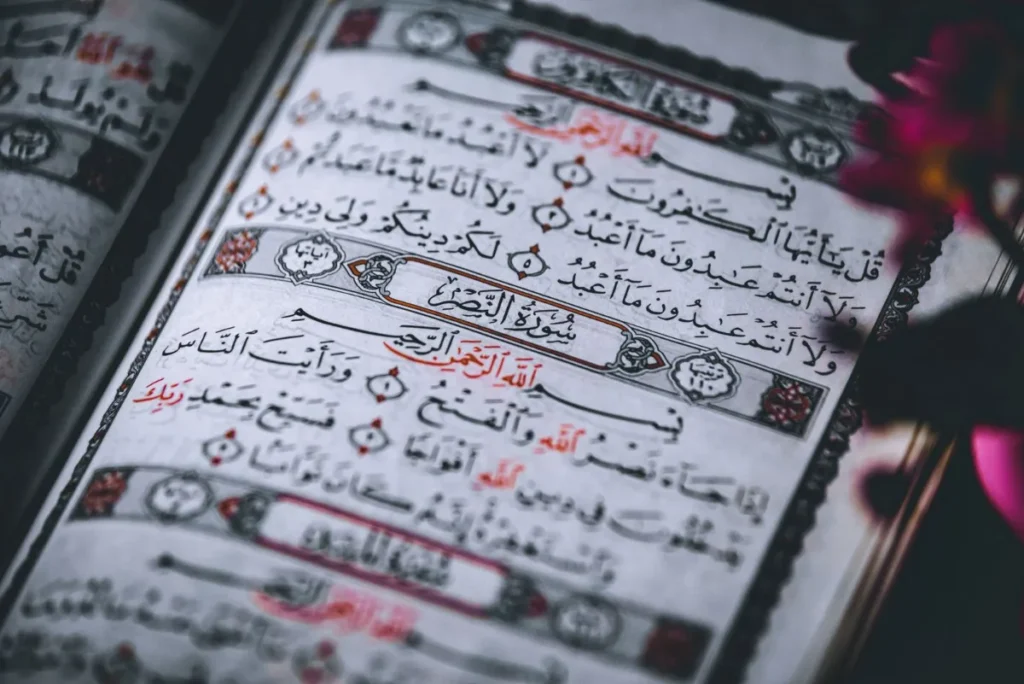
Tajweed is the set of rules for reciting the Quran correctly: giving every letter its proper sound, length and quality. The word comes from the Arabic root meaning “to make better”. Most rules can be learned in small steps, and they make sense quickly once you hear them recited and try them yourself. This guide explains the main Tajweed rules a beginner meets first, in the order most teachers introduce them.
Tajweed is learned by listening and reciting. Use this guide to understand the rules, then practise them aloud with a qualified teacher who can hear and correct you.
Why Tajweed matters
Arabic has sounds that do not exist in English, and some letters change meaning when pronounced carelessly. For example, the heavy ص (saad) and the light س (seen) are different letters, and confusing them can change a word. Tajweed protects the meaning of the words and keeps the recitation close to the way it has been taught from teacher to student over generations.
For most learners, the goal is not to memorise technical terms. It is to recite clearly and accurately, with the rules applied naturally as you read.
1. Makharij: where each letter comes from
Makharij (singular: makhraj) are the articulation points, the places in the mouth and throat where each letter is produced. Scholars group them into five main areas:
- The empty space of the mouth and throat (al-jawf): the long vowels.
- The throat (al-halq): ء ه ع ح غ خ, from the deepest part of the throat to the closest.
- The tongue (al-lisan): most letters, such as ق ك ج ش ي ض ل ن ر ط د ت ص س ز ظ ذ ث.
- The lips (ash-shafatan): ف ب م و.
- The nasal passage (al-khayshum): the source of ghunnah, the nasal sound.
Beginners usually focus first on the throat letters and on pairs that sound similar to English speakers, such as ه and ح, or ك and ق.
2. Sifaat: the qualities of letters
Sifaat are the characteristics that give each letter its sound, even when two letters share an articulation point. Some letters are heavy (tafkheem), such as خ ص ض غ ط ق ظ, and fill the mouth with sound. Others are light (tarqeeq). Some letters have a whisper of air (hams), and some an echo or bounce. Learning these qualities is what makes a recitation sound clear rather than “flat”.
3. Rules of noon sakinah and tanween
Noon sakinah is a noon with a sukoon (نْ). Tanween is the doubled vowel at the end of a word (ـًـٍـٌ), which sounds like a noon. What happens to that “n” sound depends on the letter that follows. There are four rules:
- Izhar (clear pronunciation): before the six throat letters ء ه ع ح غ خ, the noon is pronounced clearly with no nasal hold.
- Idgham (merging): before the letters of the word يرملون, the noon merges into the next letter. With ي ن م و it merges with ghunnah; with ل and ر it merges without ghunnah.
- Iqlab (changing): before ب, the noon changes into a hidden meem sound with ghunnah.
- Ikhfa (hiding): before the remaining 15 letters, the noon is partly hidden with a nasal sound, and the tongue prepares for the next letter.
For the letters of each rule, more Quran examples and common mistakes, see our full guide to noon sakinah and tanween rules.
4. Rules of meem sakinah
Meem sakinah (مْ) has three rules, sometimes called the “lip” rules because meem is a lip letter:
- Ikhfa shafawi: before ب, the meem is hidden with ghunnah, the lips lightly closed.
- Idgham shafawi: before another meem, the two merge into one doubled meem with ghunnah.
- Izhar shafawi: before every other letter, the meem is pronounced clearly. Take extra care before و and ف, where it is easy to hide the meem by mistake.
5. Ghunnah: the nasal sound
Ghunnah is a nasal sound held for about two counts. It is strongest on noon and meem with a shaddah (نّ and مّ), and it also appears in idgham with ghunnah, iqlab and ikhfa. A simple way to check it: gently pinch your nose while holding the sound. If the sound stops, you are producing ghunnah.
6. Qalqalah: the echoing letters
The five qalqalah letters are ق ط ب ج د, often remembered with the phrase قطب جد (qutbu jad). When one of them carries a sukoon, it is pronounced with a small bounce or echo so that the sound is not swallowed. The bounce is stronger when you stop on the letter at the end of a verse, as in the last word of Surah al-Ikhlas.
Our guide to qalqalah letters explains the levels of qalqalah and how to practise them.
7. Madd: lengthening the vowels
Madd means stretching a long vowel. The basic (natural) madd is two counts: roughly the time it takes to fold two fingers. Other types are longer and are triggered by a hamzah or a sukoon after the long vowel:
- Madd muttasil (connected): a hamzah comes after the long vowel in the same word. In the common recitation of Hafs from Asim it is stretched four or five counts.
- Madd munfasil (separated): the long vowel ends one word and the hamzah begins the next. It is commonly stretched four or five counts, and in some routes of Hafs two counts.
- Madd lazim (necessary): a permanent sukoon or shaddah follows the long vowel. It is stretched six counts.
- Madd arid lis-sukoon: when you stop on a word and the last letter becomes silent, the long vowel before it may be stretched two, four or six counts.
Consistency matters more than the exact number: choose one length for each type and keep it the same throughout your recitation.
8. Heavy and light letters: ra and the lam of Allah
Two letters change between heavy and light depending on the vowels around them. The letter ر is usually heavy with a fatha or damma and light with a kasra. The lam in the name Allah is heavy after a fatha or damma (as in قَالَ اللَّهُ) and light after a kasra (as in بِسْمِ اللَّهِ).
How to practise Tajweed rules
- Learn one rule at a time and find it in short surahs you already know, such as those in Juz Amma.
- Listen to a slow, clear reciter and repeat short phrases after them.
- Record yourself and compare the recording with the reciter.
- Use a colour-coded Tajweed Mushaf to spot the rules while reading.
- Ask a teacher to listen regularly. Small mistakes are easy to miss in your own recitation.
If you are still learning to read, start with Noorani Qaida or Quran reading. If you already read fluently, our Quran with Tajweed course works through these rules as you recite. You can also read our guide to learning Quran with Tajweed online.
Knowing where to pause matters too: our guide to Quran stop signs explains the waqf symbols in the Mushaf.
Frequently asked questions
How long does it take to learn the basic Tajweed rules?
Many learners understand the main rules within a few months of regular lessons. Applying them smoothly takes longer, because it depends on practice and on how often a teacher listens and corrects your recitation.
Can I learn Tajweed without knowing Arabic?
Yes. Tajweed is about pronunciation, so you do not need to understand Arabic grammar. You do need to read the Arabic script, which is why beginners usually start with the Noorani Qaida.
Is it a sin to recite without Tajweed?
Scholars encourage every Muslim to recite as correctly as they can and to keep improving. A learner who is trying their best is not blamed for mistakes made while learning. For a ruling on your own situation, ask a scholar you trust.
What is the best way to start learning Tajweed?
Start with correct pronunciation of each letter (makharij), then the rules of noon and meem sakinah, then madd. Practise with short surahs and have a teacher check your recitation.
Learn with a teacher, one-to-one
Want someone to listen to your recitation and correct it gently? Our teachers teach Tajweed in live one-to-one lessons at times that suit you. Book a free trial lesson, or message us on WhatsApp with any questions.
Written by the Home Quran Tutors team. This article is general guidance for learners and parents; for religious rulings, please ask your teacher or a qualified scholar you trust.