United States
 United Kingdom
 Canada
 Australia
 United Arab Emirates
 Saudi Arabia
 Denmark
 France
 Germany
 Indonesia
 Ireland
 Morocco
 Netherlands
 New Zealand
 Norway
 Singapore
 South Africa
 Sweden
 Turkey
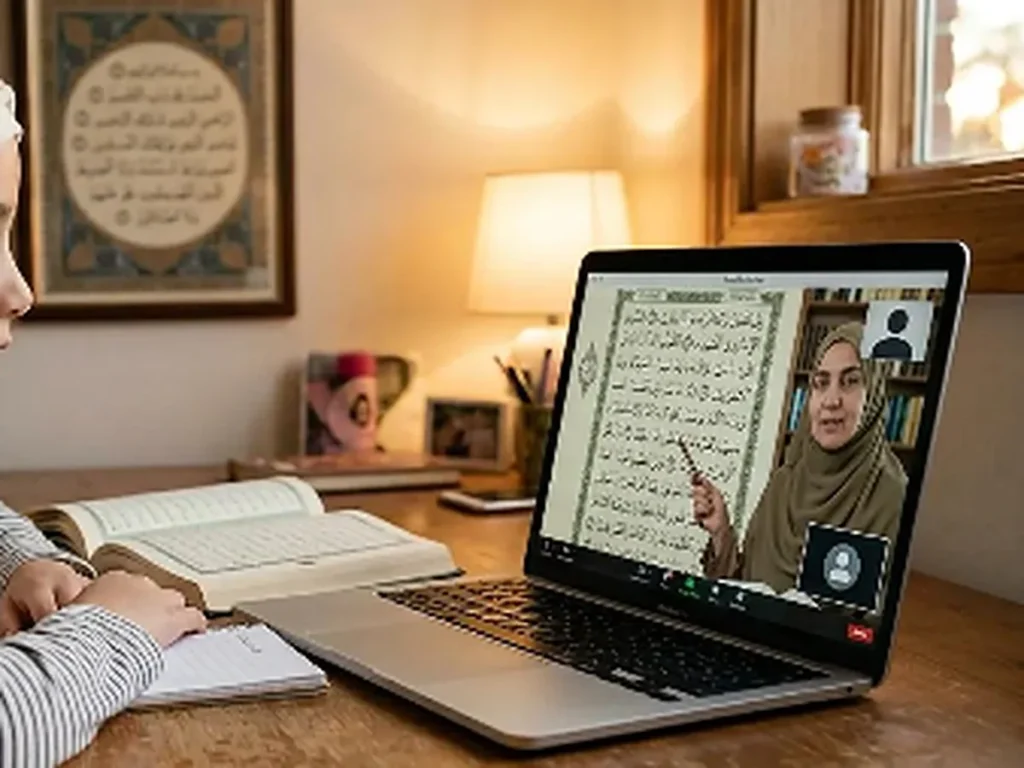
Online Quran classes have become a practical choice for many families around the world. They remove the journey to class and give children one-to-one attention. But parents rightly have questions: is my child old enough? Will they concentrate on a screen? Is it safe? This guide answers the most common ones.
What age should my child start?
Many children are ready to start learning the Arabic letters around four or five, when they can sit and focus for a short time. There is no strict rule. A child who can recognise English letters and follow simple instructions is often ready. A teacher can usually tell during a first lesson whether your child is ready, or whether a few months' wait would help.
How long should lessons be?
Our classes are 30 minutes, which suits most children: long enough to learn something new, short enough to stay focused. Younger children do best with plenty of praise inside that time. Several 30-minute lessons a week usually work better than one long weekly lesson, because children forget less between them.
What will my child learn?
Most children start with the Noorani Qaida: letters, sounds and joining. They then move on to reading from the Mushaf, learning basic Tajweed, and memorising short surahs used in prayer. Some families add Islamic studies for salah, duas and good manners.
Setting up for success at home
- Pick a regular time when your child is not tired or hungry, for many children, after a snack and a short break after school.
- Choose a shared room, not a bedroom with the door closed.
- Put the device at eye level on a stand or a pile of books.
- Remove distractions: no TV in the background, other devices away.
- Stay nearby, especially for the first few lessons.
Will my child concentrate online?
Most children concentrate well in one-to-one lessons, because the teacher's attention is entirely on them. Good teachers keep young children active: they ask them to point, repeat, and read back. If your child has a short attention span, say so when you book. Shorter lessons or a slightly slower pace can help.
Keeping lessons safe
You should always be able to:
- sit in on any lesson;
- know who your child's teacher is and how they were selected;
- communicate with the teacher through you, not privately with your child; and
- raise concerns and get a prompt response.
Ask any academy about these points before you enroll. You can read about our safeguarding approach.
How parents can help between lessons
Daily practice makes the biggest difference. Five to ten minutes is enough for young children:
- Ask your child to "teach" you the last lesson.
- Praise effort, not just accuracy.
- Keep practice at the same time each day so it becomes a habit.
- Tell the teacher about anything that is hard at home.
For more ideas, see helping children build a Quran learning routine.
How to choose the right class
Look for one-to-one lessons, a free trial, clear information about teachers, and flexible times in your time zone. Our guide on how to choose an online Quran teacher has a checklist of questions.
Ready to try?
A free trial lesson is the best way to see how your child responds. Book one here and tell us a little about your child.
Written by the Home Quran Tutors team. This article is general guidance for learners and parents; for religious rulings, please ask your teacher or a qualified scholar you trust.