United States
 United Kingdom
 Canada
 Australia
 United Arab Emirates
 Saudi Arabia
 Denmark
 France
 Germany
 Indonesia
 Ireland
 Morocco
 Netherlands
 New Zealand
 Norway
 Singapore
 South Africa
 Sweden
 Turkey
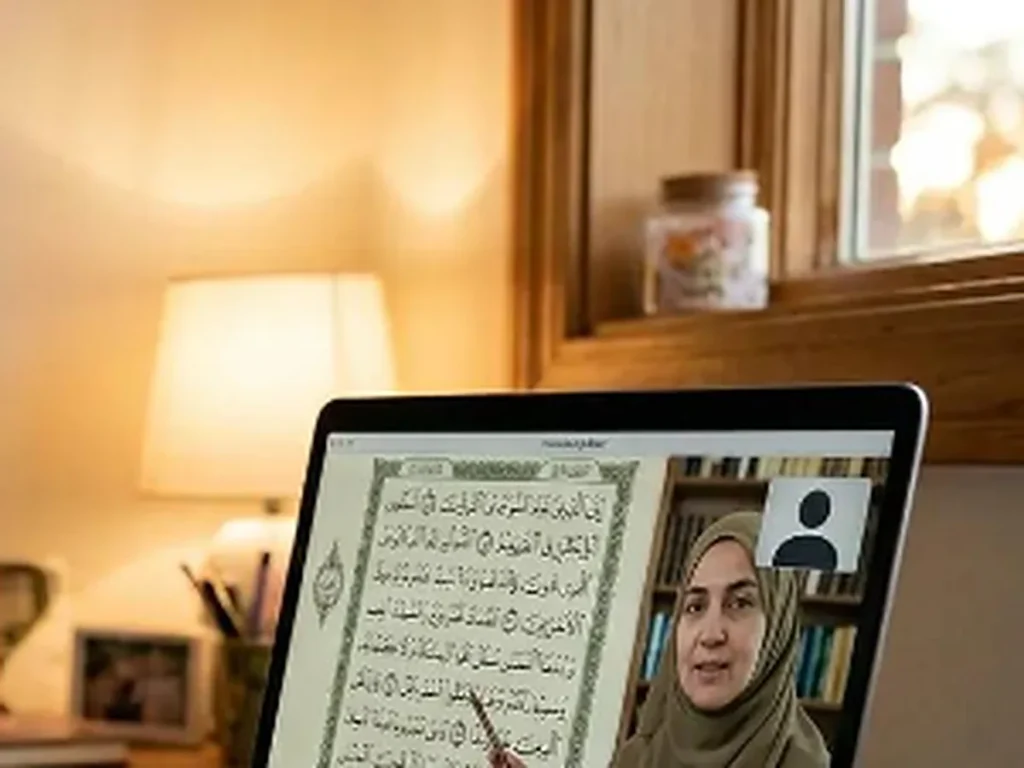
The teacher makes more difference to Quran learning than almost anything else. Online, you have many choices, which makes it worth knowing what to look for. Here is a practical checklist.
1. Recitation and teaching qualifications
Ask about the teacher's own recitation and training. Useful questions:
- How did the teacher learn Tajweed, and with whom?
- Do they hold an ijazah or a recognised Quran teaching qualification? (Not every good teacher does, but it is fair to ask.)
- How long have they taught, and which age groups?
A trustworthy academy will tell you only what it has verified, and will not exaggerate.
2. Teaching style
A strong recitation does not automatically make a good teacher. In a trial lesson, notice whether the teacher:
- corrects mistakes clearly but kindly;
- explains in a way the learner understands;
- keeps young children engaged;
- sets a clear practice task at the end; and
- adapts when something is not working.
3. Communication
Can the teacher explain clearly in the language your family uses? Will you receive updates on progress? Is it easy to reach the academy when you need to reschedule?
4. Safeguarding (for children)
These are essential questions for any academy teaching children:
- Can parents observe lessons at any time?
- How are teachers selected and checked?
- Do teachers communicate through parents rather than directly with children?
- Is there a clear process for raising concerns?
See our approach to safeguarding.
5. Teacher preference
If you or your child would prefer a female or male teacher, ask whether one is available at your preferred times, and whether the academy will confirm this before the first lesson. Read about our female Quran teacher option.
6. Scheduling and consistency
Consistency matters. Ask whether the learner will have the same teacher each week, and how lessons are scheduled in your time zone. Families in every country should check that times are confirmed in their local time.
7. A genuine trial lesson
A free trial lets you see the teacher in action with no commitment. Use it to judge the points above, not just whether your child enjoyed it: although that matters too.
Red flags
- Claims that sound too good to be true ("fluent in two weeks").
- No clear information about who the teachers are.
- Reluctance to let parents sit in.
- Pressure to pay before you have seen a lesson.
Choose with confidence
A good teacher combines accurate recitation, patience and reliability. Book a free trial with us and judge for yourself.
Written by the Home Quran Tutors team. This article is general guidance for learners and parents; for religious rulings, please ask your teacher or a qualified scholar you trust.