United States
 United Kingdom
 Canada
 Australia
 United Arab Emirates
 Saudi Arabia
 Denmark
 France
 Germany
 Indonesia
 Ireland
 Morocco
 Netherlands
 New Zealand
 Norway
 Singapore
 South Africa
 Sweden
 Turkey
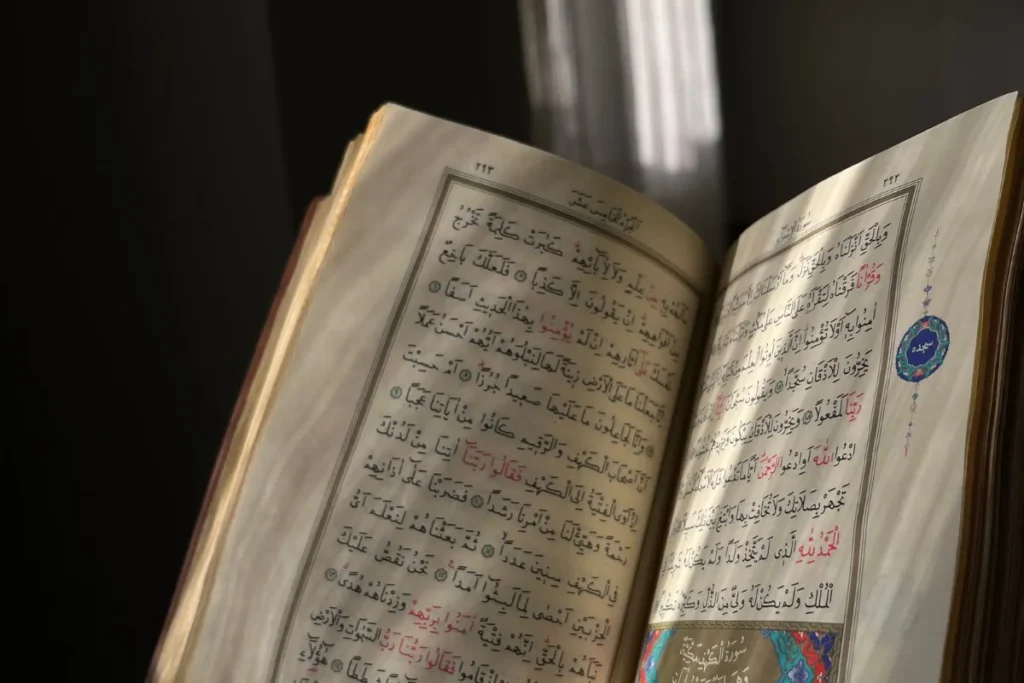
Surah Al-Ma’un (often written “Surah Maun”) is the 107th chapter of the Quran. Its seven short verses describe the character of a person who denies the Day of Judgment: they push away the orphan, do not encourage feeding the poor, are careless about their prayer, pray only to be seen, and refuse even small acts of help. The name Al-Ma’un refers to those small, everyday kindnesses. This guide explains the Arabic text, the meaning of each verse, what scholars said about its key words, and how to teach its message to children.
The English meanings below are our own plain-English renderings. You can compare them with published translations on Quran.com.
Surah Maun at a glance
| Detail | Information |
|---|---|
| Name | Al-Ma’un (الماعون), “small kindnesses” or “simple assistance” |
| Chapter number | 107 |
| Number of verses | 7 |
| Where it was revealed | Scholars differ: many say Makkah; others say part of it was revealed in Madinah |
| Where it is found | Juz ‘Amma, the 30th part of the Quran |
| Main theme | True faith shows in prayer and in kindness to people |
Surah Maun in Arabic
Arabic text: Quran 107:1-7, from Quran.com.
Surah Maun meaning, verse by verse
Verses 1-3: how belief shows in the way we treat people
Meaning: (1) Have you seen the one who denies the Judgment? (2) That is the one who harshly pushes away the orphan, (3) and does not encourage the feeding of the poor.
The surah opens with a question that makes the listener think. The word ad-din here is usually explained as the Day of Recompense, when every deed is repaid. The point is striking: denial of the Hereafter is not only a matter of words. It shows in behavior, in how a person treats those who have no power, such as orphans and the poor.
Notice that verse 3 does not only say “does not feed the poor”. It says “does not encourage feeding”. Even someone who cannot give much can still urge others to give.
Verses 4-5: carelessness about prayer
Meaning: (4) So woe to those who pray, (5) who are heedless of their prayer.
These verses surprise many readers, because the warning is directed at people who pray. Commentators explained that the heedlessness meant here includes delaying the prayer until its time has passed, praying without care or attention, and neglecting it altogether. It is a warning about how a person prays, not a discouragement from praying.
Verse 6: praying to be seen
Meaning: (6) Those who only want to be seen.
This verse describes riya’, doing acts of worship to impress people rather than to please Allah. Scholars treat it as a serious matter because it empties a good deed of its sincerity.
Verse 7: withholding small kindnesses
Meaning: (7) And who refuse to give even simple help.
The final verse gives the surah its name. The companion Abdullah ibn Mas’ud said that in the time of the Prophet ﷺ they understood al-ma’un to mean lending a bucket and a cooking pot (Sunan Abi Dawud 1657, graded hasan). Other early scholars explained it as zakat. Both explanations point in the same direction: a believer does not hold back help that costs little but means a lot to the person who needs it.
Want your children to understand the surahs they recite? Our Islamic studies and Quran lessons for kids connect the meaning of short surahs to everyday life. Book a free one-to-one trial class.
The structure of the surah: two halves, one message
| Part | Verses | Focus |
|---|---|---|
| Rights of people | 1-3 | Orphans and the poor |
| Rights of Allah | 4-6 | Sincere, attentive prayer |
| Rights of people again | 7 | Everyday help and generosity |
The surah moves from people, to prayer, and back to people. The lesson is that worship and good character belong together. A prayer that does not lead to kindness, and kindness without faith, are both incomplete.
Lessons from Surah Maun for everyday life
- Care for orphans and the vulnerable. In the US and UK this might mean supporting fostering and orphan sponsorship programs, or simply including a child who has lost a parent.
- Encourage others to give. Organizing a food drive at school or at the masjid, or reminding friends about a local food bank, fulfils the spirit of verse 3.
- Pray on time and with attention. Setting prayer reminders at work or school is a practical way to avoid delaying salah.
- Check your intentions. Before a good deed, a quick reminder to yourself that you are doing it for Allah protects your sincerity.
- Lend and share. Lending a neighbor a tool, sharing food or helping with a small task are the modern versions of “the bucket and the cooking pot”.
For the bigger picture of prayer and charity in Islam, see our guides to the five pillars of Islam and the types of prayer in Islam.
How to memorize Surah Maun
- Learn it in three parts that follow the structure above: verses 1-3, verses 4-6, then verse 7.
- Notice the endings. Most verses end in -un or -in sounds (ad-din, al-yatim, al-miskin, as-sahun, yura’un, al-ma’un), which makes the surah easy to remember.
- Listen and repeat after a slow reciter, verse by verse.
- Recite it in salah once you know it, so it stays fresh.
Pronunciation points
- “Yadu”ul-yatim”: the ع carries a shaddah. Pause slightly on it before continuing.
- “Fawaylul-lil-musallin”: the tanween of wayl merges into the lam (idgham without ghunnah).
- “Yura’un”: the alif before the hamzah is stretched. A teacher can show you the correct length.
If these rules are new to you, our Quran with Tajweed course teaches them through short surahs like this one, and the Quran translation course goes deeper into the meaning.
Frequently asked questions
What does “Al-Ma’un” mean?
Al-Ma’un refers to small acts of help and everyday items people lend each other. Abdullah ibn Mas’ud said the companions understood it as lending a bucket and a cooking pot; some early scholars explained it as zakat.
What is Surah Maun about?
It describes the behavior of a person who denies the Day of Judgment: mistreating orphans, not encouraging feeding the poor, being careless in prayer, showing off, and refusing small kindnesses.
How many verses are in Surah Maun?
Surah Al-Ma’un has seven verses. It is chapter 107 of the Quran.
Why does Surah Maun warn people who pray?
The warning is for those who are heedless of their prayer, for example by delaying it beyond its time or praying only to be seen. It encourages sincere and attentive prayer, not abandoning prayer.
Is Surah Maun Makki or Madani?
Scholars differ. Many classify it as Makki, while others hold that some of its verses were revealed in Madinah.
Living the message of Surah Maun
Surah Al-Ma’un is only seven verses long, yet it gives a complete picture of faith: sincere prayer and practical kindness. If you would like to learn it, or help your child learn it, with correct pronunciation and meaning, find the right Quran learning program or contact Home Quran Tutors.
Understand what you recite. Live one-to-one lessons in Quran reading, Tajweed and meaning for children and adults.
Written by the Home Quran Tutors team. This article is general guidance for learners and parents; for religious rulings, please ask your teacher or a qualified scholar you trust.