United States
 United Kingdom
 Canada
 Australia
 United Arab Emirates
 Saudi Arabia
 Denmark
 France
 Germany
 Indonesia
 Ireland
 Morocco
 Netherlands
 New Zealand
 Norway
 Singapore
 South Africa
 Sweden
 Turkey
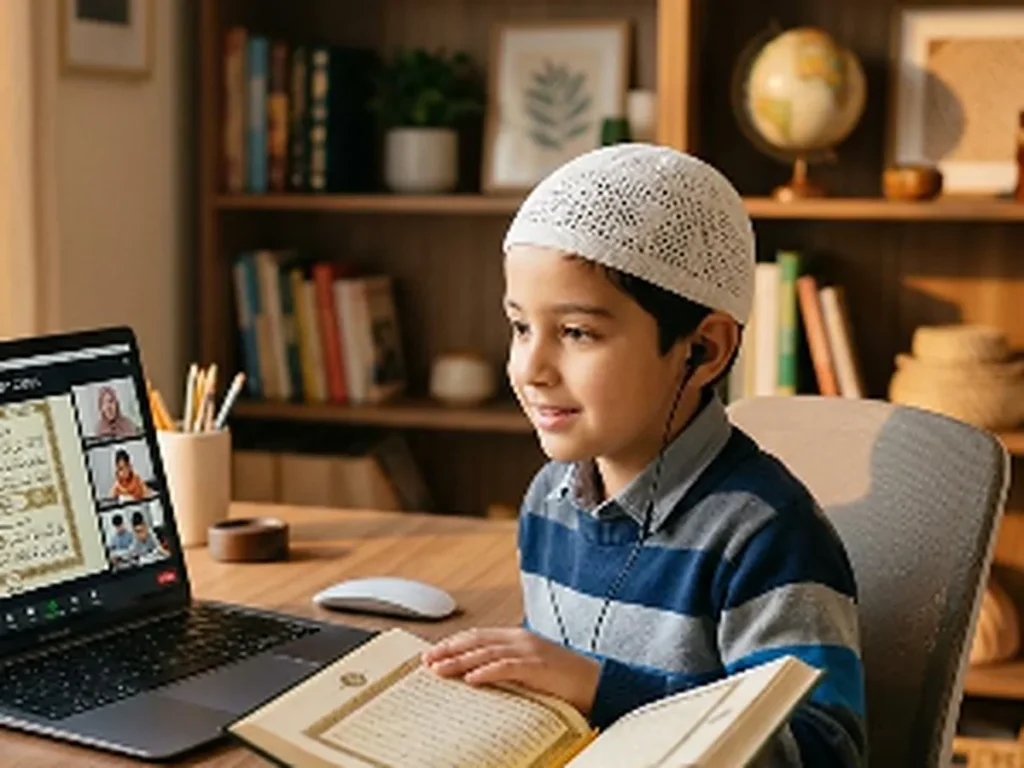
Memorising the Quran (Hifz) is a long, rewarding commitment. Online Hifz classes make it possible to study with a dedicated teacher from home, with lessons often several days a week. Here is how they typically work.
Is the learner ready for Hifz?
Before starting, a learner should be able to read the Quran fluently with good basic Tajweed. Memorising with mistakes means memorising the mistakes, which are hard to remove later. If reading is not yet secure, teachers usually recommend Quran reading or Tajweed first.
The three parts of a Hifz lesson
Many Hifz programs balance three elements:
- New lesson (often called sabaq): a new portion to memorise. Its size depends on the learner's age and ability: it could be a few lines or more.
- Recent revision (sabqi): the portions memorised over the last days or weeks, recited to keep them fresh.
- Long-term revision (manzil): older portions, revised on a rotating schedule so they are not forgotten.
The balance changes over time. As more is memorised, revision takes a larger share of each lesson.
How online Hifz lessons run
In a typical lesson, the learner recites the new lesson from memory, then the recent and long-term revision. The teacher listens closely, corrects mistakes and notes weak spots. The lesson ends with a clear target for the next day. Because online lessons need no travel, many students take lessons four or five days a week.
A daily routine at home
Teachers will suggest a routine, but many students:
- prepare the next new lesson by listening to it and reading it several times;
- repeat the new lesson from memory in short sessions through the day;
- revise recent portions before the lesson; and
- keep one day a week focused on long-term revision.
Short, frequent sessions usually work better than one long session.
How parents can support young hafiz
- Keep lesson and practice times consistent.
- Listen to your child recite, even if you are not a hafiz yourself: following the text is enough.
- Encourage rather than pressure; Hifz is a long journey.
- Keep in touch with the teacher about progress and any difficulties.
Realistic expectations
There is no single correct pace for Hifz. Some students memorise the whole Quran over several years; others memorise selected surahs or a few Juz. What matters most is accuracy and retention. A good teacher will set realistic milestones and adjust them as needed.
Adults and Hifz
Adults can memorise too. They often move more slowly than children but can plan and revise very deliberately. Many adults start with surahs they recite often in prayer.
Start your Hifz journey
Our online Hifz classes are one-to-one with careful revision planning. Book a free trial and the teacher will assess reading and readiness.
Written by the Home Quran Tutors team. This article is general guidance for learners and parents; for religious rulings, please ask your teacher or a qualified scholar you trust.